
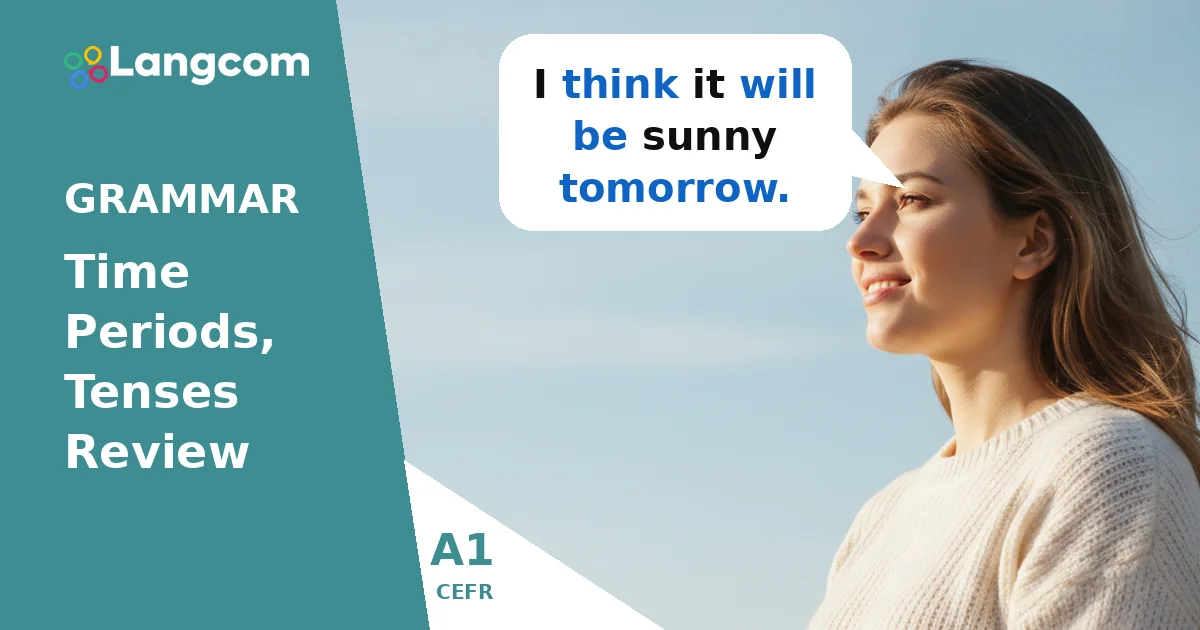

How do we talk about the future in English?
In English, there are different ways to talk about things that will happen later. At A1 level, the two most important ways are using will そして、その present continuous tense.
These two forms help you express different types of future events. It is important to know when to use each one.
When do we use will?
当社では will for two main situations:
- Predictions: When you think something will happen, but you are not 100% sure. It is your opinion.
- Spontaneous Decisions: When you decide something at the moment you are speaking. It is a quick decision.
The form for will is simple:
- Subject + will + base verb (the verb without to, 例えば go, eat, be).
For negative sentences, we use will not または won't.
- I will not go. / I won't go.
When do we use the present continuous for the future?
We use the present continuous to talk about definite plans and arrangements for the future. These are things you have already organized. You have a time, a place, or a ticket.
The form for the present continuous is:
- Subject + am/is/are + verb-ing (the verb with +ing, 例えば going, eating, being).
否定文の場合は、 not その後 am/is/are.
- I am not going. / She isn't coming.
「~と~の違いは何ですか」 will そして present continuous?
The main difference is about how sure or planned the future event is:
- 使用方法 will for things you think will happen, or decisions you make right now. It is often less certain or not planned in advance.
- 「」を使用してください。 present continuous for things you have already planned and arranged. It is a fixed plan.
Think of it like this:
- Will = "I think this will happen" or "I decide this now."
- Present continuous = "This is already in my calendar."
| 使用方法 | 例 |
|---|---|
| Predictions, spontaneous decisions | I think it will be cold. |
| Fixed plans, arrangements | I am meeting John at 3 PM. |
例
- I think it will be sunny tomorrow.
- Oh, the phone is ringing! I will answer it.
- She will probably arrive late.
- We are having dinner at a restaurant tonight.
- They are flying to Paris next month.
- Are you working on Saturday?
- I won't forget your birthday.
- He isn't coming to the party.
練習
💬 個別のアドバイスが必要ですか?
当校はケンブリッジ試験の公認準備センターとして、皆様に最適なコースや資格取得への道をご案内いたします。ぜひ今すぐアドバイザーにご相談ください。.
WhatsAppでアドバイザーとチャットスペイン語話者がよく犯す間違い
スペイン語を話す人たちは、次のような間違いを犯すことがあります:
- 使用方法 will for all future plans: In Spanish, you often use one future tense for many situations. In English, it is important to choose correctly.
誤り: I will meet my friend at 7 PM tomorrow. (If it's a fixed plan)
右: I am meeting my friend at 7 PM tomorrow.
- ~を忘れて verb-ing form with am/is/are: Remember the full structure for the present continuous.
誤り: We are go to the cinema tonight.
右: We are going to the cinema tonight.
よくある質問
Can I use will for plans?
以下の方法をご利用いただけます will for plans you decide right now, or for general intentions. But for fixed plans, like appointments or tickets, the present continuous is better. For example, I will visit my aunt soon (general intention) vs. I am visiting my aunt on Saturday (fixed plan).
Is be going to also for the future?
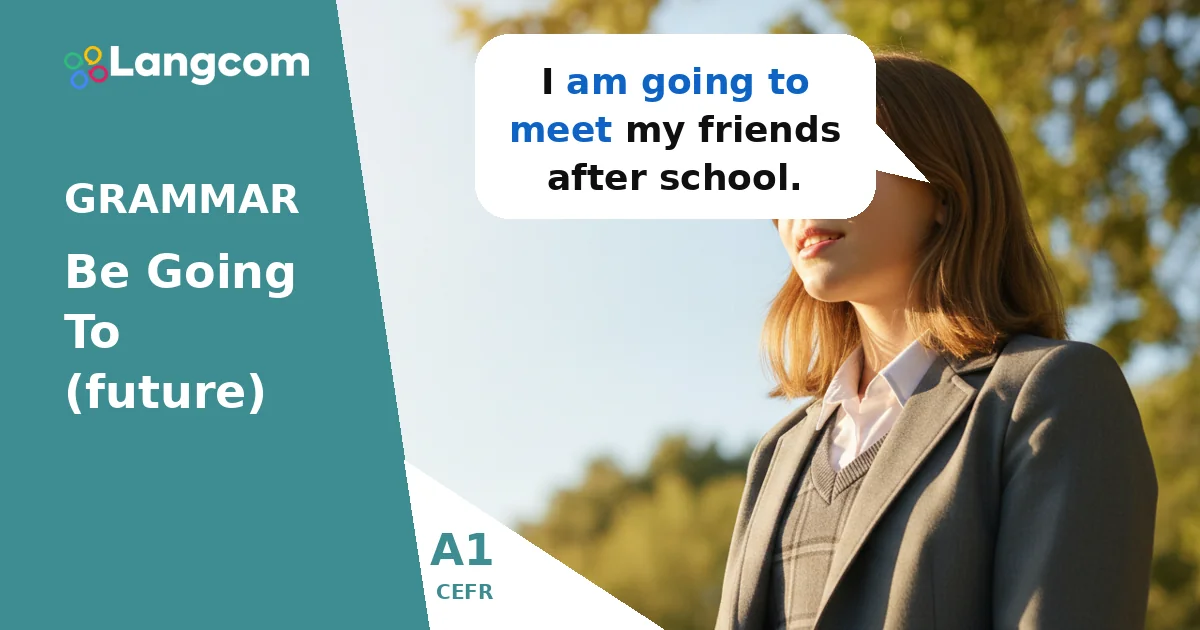
はい、, be going to is also for the future! It is used for plans you have already made (similar to present continuous) and for predictions based on present evidence. For example, Look at those clouds! It is going to rain. At A1, focus on will そして present continuous first.
What are common future time words?
You can use many time words with both will そして、その present continuous. Some common ones are: tomorrow, next week, next month, next year, tonight, soon, in five minutes, on Monday.
Why is it important to learn these different future forms?
Learning these forms helps you speak more accurately and naturally in English. It shows if your future event is a prediction, a quick decision, or a definite plan. This makes your communication clearer for others.



コメント 0 件