

Why is House and Home Vocabulary Important?
Knowing words for your house and home is very practical. It helps you talk about your daily life.
- You can describe your own home to friends.
- You can understand others when they talk about their houses.
- This vocabulary is often tested in the B1 Preliminary (PET) exam. You might need it for describing pictures, writing emails, or answering questions in the speaking part.
Let’s learn some key words for different parts of a house.
Words for Your Living Room
The living room is often where people relax and spend time together. Here are some important words:
- Sofa: A long, upholstered seat with a back and arms, for two or more people. We have a big sofa in our living room.
- Armchair: A comfortable chair with arms. My grandfather always sits in his armchair to read.
- Cushions: Soft bags of cloth, filled with soft material, used for comfort on sofas or chairs. The sofa has many colourful cushions.
- Rug: A small carpet that covers only part of the floor. There is a soft rug in front of the fireplace.
Kitchen Essentials
The kitchen is where you cook and prepare food. Here are some key items:
- Cooker: An appliance used for cooking food, usually with an oven and hobs. She is cooking dinner on the new cooker.
- Fridge: (Short for refrigerator) An appliance that keeps food and drinks cold. Please put the milk back in the fridge.
- Sink: A basin, usually in a kitchen or bathroom, with a tap that supplies water. I need to wash the dishes in the sink.
- Taps: Devices that control the flow of water from a pipe. Don't forget to turn off the taps after you wash your hands.
- Cupboards: Pieces of furniture with doors and shelves, used for storing things. The plates are in the kitchen cupboards.
Vocabulary for the Bathroom
The bathroom is where you wash and get ready. Learn these words:
- Bath: A large container in which you wash your whole body. I love to relax in a hot bath.
- Toilet: A bowl that you sit on to get rid of body waste. The toilet is in the bathroom.
- Towels: Pieces of absorbent cloth used for drying. Please hang the wet towels to dry.
- Mirror: A surface, usually glass, that reflects an image. She looked at herself in the mirror.
Bedroom Items You Should Know
The bedroom is where you sleep and rest. Here are some common items:
- Pillow: A soft object that you rest your head on when you are in bed. I need a new pillow for my bed.
- Duvet: A soft, flat bag filled with feathers or artificial material, used as a covering on a bed. It's cold, so I need a warm duvet.
- Blankets: Soft, warm coverings for a bed. I put an extra blanket on the bed in winter.
| Room | Vocabulary Item |
|---|---|
| Living Room | Sofa, Armchair, Cushions, Rug |
| Kitchen | Cooker, Fridge, Sink, Taps, Cupboards |
| Bathroom | Bath, Toilet, Towels, Mirror |
| Bedroom | Pillow, Duvet, Blankets, Mirror |
例
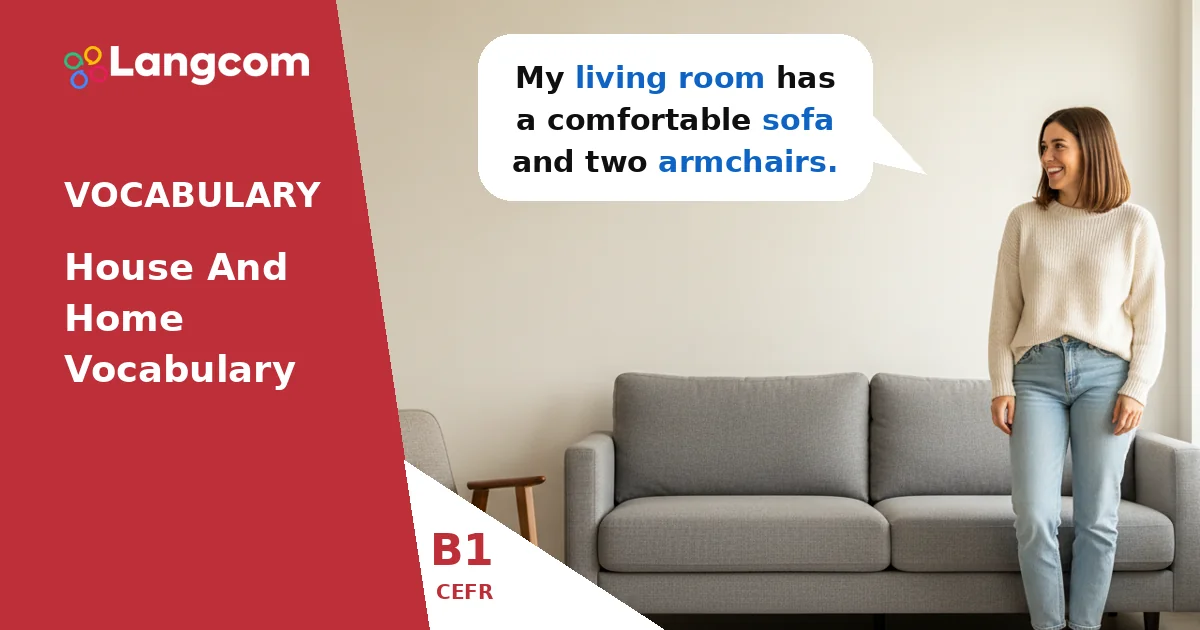
- My living room has a comfortable sofa and two armchairs.
- She keeps her clean towels in the bathroom cupboard.
- Could you please put the vegetables in the fridge?
- I always make sure the taps are off before leaving the kitchen.
- He likes to read a book while sitting on the sofa with a soft cushion.
練習
スペイン語話者がよく犯す間違い
House 対. Home
Many Spanish speakers confuse house そして home.
- House refers to the physical building. We bought a new house. (a building)
- Home refers to the place where you live, often with emotional meaning. It can be a house, an apartment, or even a country. I'm going home. (to my place of residence, where I feel comfortable)
Furniture (Uncountable)
In English, furniture is an uncountable noun. Do not add '-s' to make it plural.
- 正しい: We need some new furniture for the living room.
- 誤り: We need some new furnitures.
- If you want to talk about individual items, say a piece of furniture または items of furniture.
Rug 対. Carpet
While similar, these words have a difference:
- Rug: A smaller piece of material that covers only part of the floor. There's a small rug under the coffee table.
- Carpet: A large piece of material that covers the entire floor of a room. The whole living room has a new carpet.
よくある質問
What is the main difference between 'house' and 'home'?
A house is a physical building where people live. A home is the place where you live, which can be a house or an apartment, and it often carries a feeling of belonging and comfort. For example, This is my house (the building), but I'm going home (to my place of comfort).
Why is this vocabulary important for the B1 Preliminary (PET) exam?
This vocabulary is crucial for the B1 Preliminary exam because you might need to describe your home or a room in the Speaking Part 2 (long turn) or in the Writing Part 2 (email/story). For example, you might describe my bedroom has a big bed and a mirror.
Can I use 'stove' instead of 'cooker'?
はい、, stove is another common word for cooker, especially in American English. Both refer to the appliance used for cooking. Oven refers specifically to the enclosed part of the cooker where food is baked.
What is the difference between a 'duvet' and a 'blanket'?
A duvet is a thick, soft bag filled with feathers or synthetic material, used as the main top covering on a bed. A blanket is a piece of warm fabric, often used as an extra layer on a bed or for warmth on a sofa. You might use several blankets, but usually only one duvet.



コメント 0 件