
What are Free Time Activities?
Free time activities are things you do when you are not working or studying. They are for fun and relaxation. Many people have hobbies or interests they enjoy.
For example, some people like reading books, playing sports, oder watching movies.
🎓 Englisch lernen mit der Blended-Methode
Kleingruppen · KI-Tutor rund um die Uhr · Vorbereitung auf die Cambridge-Prüfungen
Pläne von $39 $79 pro Monat
Common Verbs for Your Free Time
Here are some important verbs you can use to talk about free time activities:
- Go: We use go for activities that involve movement or going to a place.
- go shopping
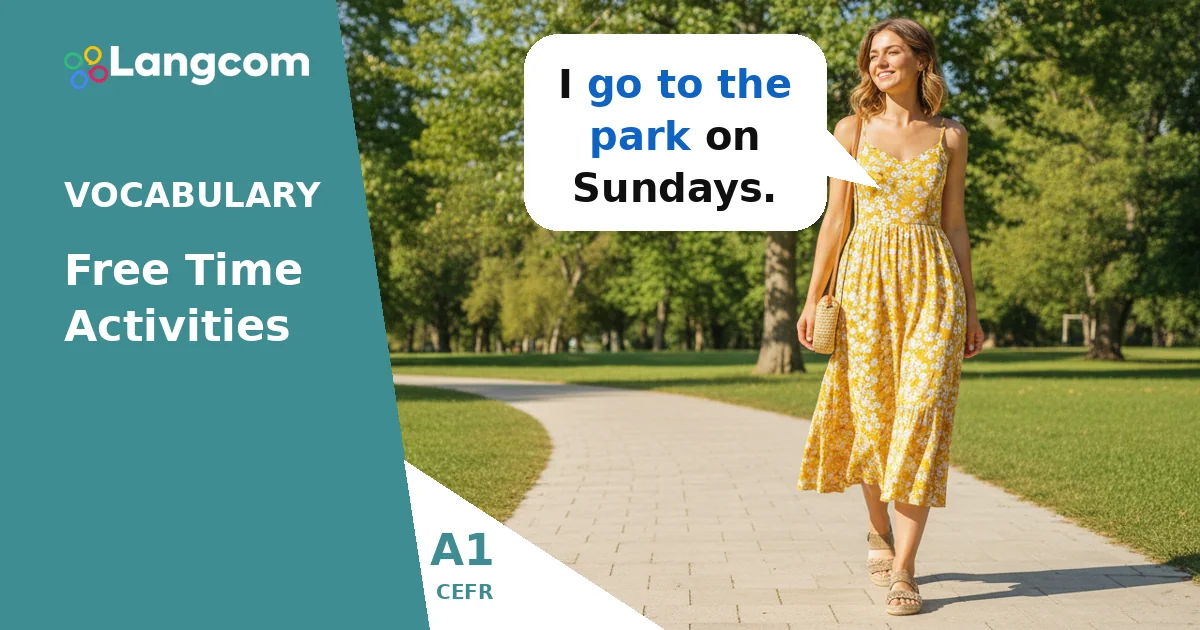
- go to the park
- go to the cinema
- go for a walk
- Play: We use play for sports, games, and musical instruments.
- play football
- play video games
- play the guitar
- Read: We use read for books, magazines, and newspapers.
- read a book
- read a magazine
- Watch: We use watch for TV, movies, and sports events.
- watch TV
- watch a movie
- watch a football match
- Listen to: We use listen to for music, podcasts, or the radio. Remember “to”!
- listen to music
- listen to the radio
- Do: We use do for general activities, hobbies, or exercises.
- do sport
- do yoga
- do homework (sometimes a free time activity, sometimes not!)
- Have: We use have for meals, drinks, or a general good time.
- have breakfast
- have coffee with friends
- have a good time
How to Use These Verbs in Sentences
You can use these verbs to talk about what you do in your free time. Here are some simple sentences:
- I often go shopping on Saturdays.
- My friends and I play video games.
- She likes to read a book before bed.
- We watch TV in the evening.
- He listens to music every day.
- They do sport at the gym.
- I have coffee with my family on Sundays.
| Verb | Tätigkeit |
|---|---|
| go | shopping, to the park |
| play | football, video games |
| read | a book, magazines |
| watch | TV, a movie |
| listen to | music, the radio |
| do | sport, yoga |
| have | breakfast, coffee |
Examples
- I go to the park on Sundays.
- Do you play football?
- She reads magazines in her free time.
- We watch movies on Fridays.
- My brother listens to the radio.
- They do yoga in the morning.
- I have breakfast at 7 AM.
Practice
💬 Benötigen Sie eine individuelle Beratung?
Als autorisiertes Cambridge-Vorbereitungszentrum können wir Ihnen helfen, den richtigen Kurs und die passende Zertifizierung zu finden. Chatten Sie noch heute mit unseren Beratern.
Chatten Sie mit einem Berater auf WhatsAppCommon mistakes for Spanish speakers
Spanish speakers sometimes make these mistakes:
- Using do instead of go for shopping:
- Wrong: I do shopping.
- Right: I go shopping.
- Missing to after listen:
- Wrong: I listen music.
- Right: I listen to music.
- Using make instead of do for sports:
- Wrong: I make sport.
- Right: I do sport.
Häufig gestellte Fragen
What does “free time” mean?
“Free time” is the time when you are not working, studying, or doing chores. It is time for relaxation and hobbies.
Why is it important to learn these verbs?
Learning these verbs helps you talk about your daily life, hobbies, and what you enjoy. It makes your English sound more natural.
Can I use different verbs for the same activity?
Sometimes, yes. For example, you can go to the cinema oder watch a movie. But often, there is one common verb, like play football.
How can I practice these free time activity verbs?
Try to describe your own free time activities using these verbs. You can write sentences or speak about them with a friend. Listen to English speakers and notice which verbs they use.

0 Kommentare