


What is the difference between drive, fly, and ride?
In English, we use different verbs to talk about how we travel. The verb depends on the type of transport.
- Wir verwenden drive for vehicles that you control while sitting inside.
- Wir verwenden fly for travel in the air.
- Wir verwenden ride for vehicles you sit on top of.
✍️ Du bist dir nicht sicher, auf welchem Niveau du bist?
Machen Sie unseren kostenlosen Einstufungstest und erhalten Sie individuelles Feedback von zertifizierten Cambridge-Prüfern.
Machen Sie unseren KOSTENLOSEN EinstufungstestWhen do we use 'drive'?
You use the verb drive when you are the person operating or controlling a vehicle with wheels. This means you are the driver.
Common vehicles we drive include:
- a car
- a bus
- a coach
- a taxi
- a train (the train driver)
- a tram (the tram driver)
Remember, if you are a passenger, you usually go by car oder take a bus.
When do we use 'fly'?
Das Verb fly is simple. We use it when we travel through the air.
Vehicles we fly in are:
- a plane
- a helicopter
This verb is used for both the pilot (who controls the aircraft) and the passenger (who travels in it).
When do we use 'ride'?
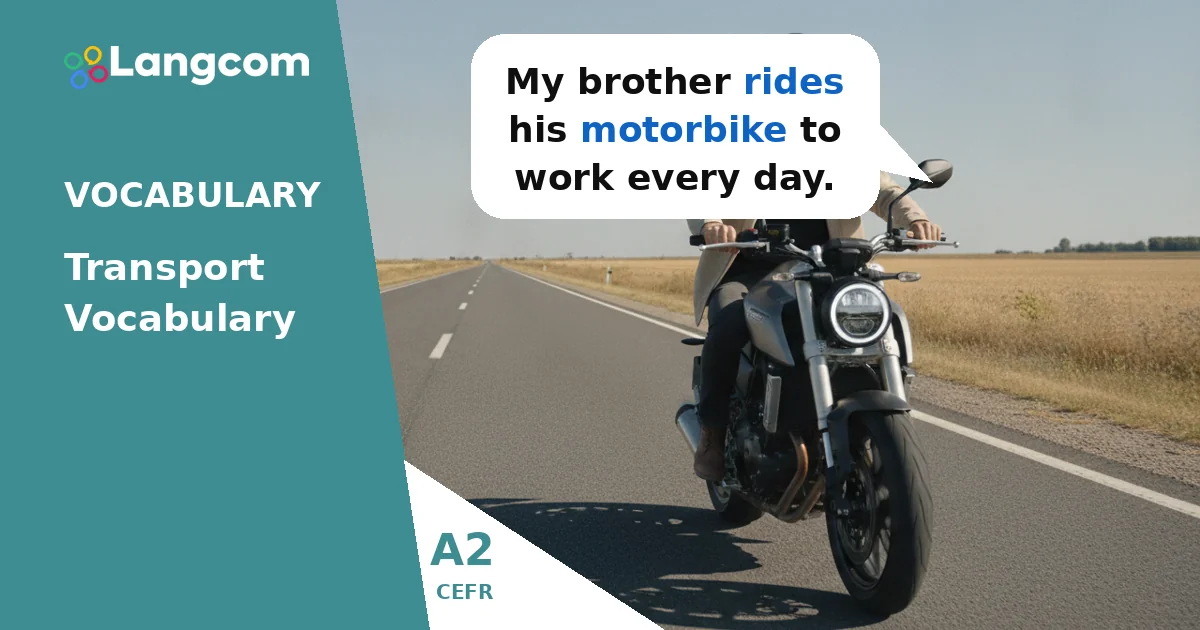
You use the verb ride when you sit on top of a vehicle or animal to travel.
Common vehicles we ride include:
- a bicycle
- a motorbike
You can also ride a horse oder ride a scooter.
Practice Travel Verbs with Langcom!
Now you understand the differences between drive, fly, und ride. It's time to practice!
Use the interactive exercise below to match the correct verb with each vehicle. This will help you remember these important travel verbs for your A2 English exams and everyday conversations.
| Verb | Vehicles |
|---|---|
| Drive | a car, a bus, a coach, a taxi, a train, a tram (when you are the driver) |
| Fly | a plane, a helicopter |
| Ride | a bicycle, a motorbike |
Beispiele
- My uncle drives a big truck for his job.
- We are going to fly to New York for Christmas.
- Do you like to ride your bicycle in the countryside?
- The bus driver drives the bus slowly in the city centre.
- She wants to learn how to ride a motorbike next year.
Übung
Bist du bereit, dein Zertifikat zu erwerben?
Der Kurs Langcom bereitet die Teilnehmer auf die Prüfungen von Cambridge, IELTS, TOEFL, DELE, SIELE und Michigan vor.
Erste Schritte mit LangcomHäufige Fehler bei Spanischsprechern
Confusing 'drive' and 'ride'
Spanish speakers often use 'conducir' for both driving a car und riding a motorbike oder bicycle. In English, these are different.
- Falsch: I drive my bicycle to school.
- Richtig: I ride my bicycle to school.
Remember: drive is for vehicles you sit inside and control (like a car). ride is for vehicles you sit on top of (wie a bicycle oder a motorbike).
Using 'drive' for passengers
Sometimes learners use drive when they are a passenger.
- Falsch: I drive the train to work every day. (Unless you are the train driver!)
- Richtig: I take the train to work every day. oder I go to work by train.
Only use drive if you are the person in control of the vehicle.
Häufig gestellte Fragen
Can I say 'go by car' instead of 'drive a car'?
Yes, you can! Go by car is a general way to say you travel in a car, whether you are the driver or a passenger. Drive a car specifically means you are the person controlling the car.
What about 'take a bus'?
Ja, take a bus is very common and correct when you are a passenger. You can also say go by bus. The driver of the bus drives the bus.
Is 'ride a train' correct?
No, we do not usually say ride a train. You take a train oder go by train as a passenger. The person who controls the train drives the train. Remember, ride is for vehicles you sit on, wie a bicycle.
How can these verbs appear in the A2 Key exam?
In the A2 Key exam, you might see these verbs in Part 1 (Multiple Choice) or Part 5 (Open Cloze) where you need to choose the correct word to complete a sentence about travel. For example, you might need to choose between drive, fly, oder ride based on the vehicle mentioned.



0 Kommentare