

What are Health Collocations?
Collocations are words that frequently appear together. They are like natural pairs or groups of words that native speakers use automatically.
For example, in English, we don’t say ‘strong rain’; we say heavy rain. Similarly, in health, we have specific collocations for different actions and states.
- Learning health collocations helps you sound more natural.
- It makes your English clearer and easier to understand.
- It expands your vocabulary beyond single words.
🎓 Englisch lernen mit der Blended-Methode
Kleingruppen · KI-Tutor rund um die Uhr · Vorbereitung auf die Cambridge-Prüfungen
Pläne von $39 $79 pro Monat
Collocations for a Healthy Lifestyle
Many collocations describe positive actions we take to stay healthy or improve our health. These are useful for talking about daily habits and goals.
-
Eat a healthy diet: This means to consume food that is good for your body, like fruits, vegetables, and lean protein.
Beispiel: To stay strong, you should eat a healthy diet.
-
Keep in shape / Get fit: These phrases mean to maintain or improve your physical condition through exercise.
Beispiel: I try to keep in shape by going to the gym three times a week.
Beispiel: He wants to get fit for the marathon.
-
Give up smoking: This means to stop smoking completely.
Beispiel: It's hard to give up smoking, but it's good for your health.
Collocations for Weight and Body Condition
These collocations help us talk about changes in body weight or general physical condition.
-
Lose weight: This means to become lighter, usually by eating less or exercising more.
Beispiel: She decided to lose weight before her wedding.
-
Put on weight: This means to become heavier.
Beispiel: It's easy to put on weight if you eat too much fast food.
-
Be on a diet: This means to follow a special plan of eating to lose weight or for health reasons.
Beispiel: My friend is on a diet to prepare for summer.
-
Be overweight: This describes someone who weighs more than is considered healthy.
Beispiel: The doctor told him he was overweight and needed to exercise.
Other Important Health Collocations
Here are a few more common collocations related to health.
-
Have allergies: This means your body reacts badly to certain substances, like pollen or animal hair.
Beispiel: I have allergies to cats, so I can't have one as a pet.
-
Be a regular smoker: This describes someone who smokes often or habitually.
Beispiel: He was a regular smoker for many years before he quit.
| Collocation | Bedeutung | Beispiel |
|---|---|---|
| eat a healthy diet | Consume nutritious food. | She tries to eat a healthy diet. |
| be on a diet | Follow a specific eating plan (often for weight loss). | He is on a diet to lose weight. |
| keep in shape | Maintain good physical condition. | Running helps me keep in shape. |
| lose weight | Become lighter. | Many people want to lose weight. |
| get fit | Improve physical condition. | I want to get fit for summer. |
| give up smoking | Stop smoking completely. | It's good to give up smoking. |
| put on weight | Become heavier. | He put on weight during the holidays. |
| have allergies | Experience bad reactions to certain substances. | She has allergies to pollen. |
| be overweight | Weigh more than is healthy. | The doctor said he was overweight. |
| be a regular smoker | Smoke habitually. | He used to be a regular smoker. |
Beispiele
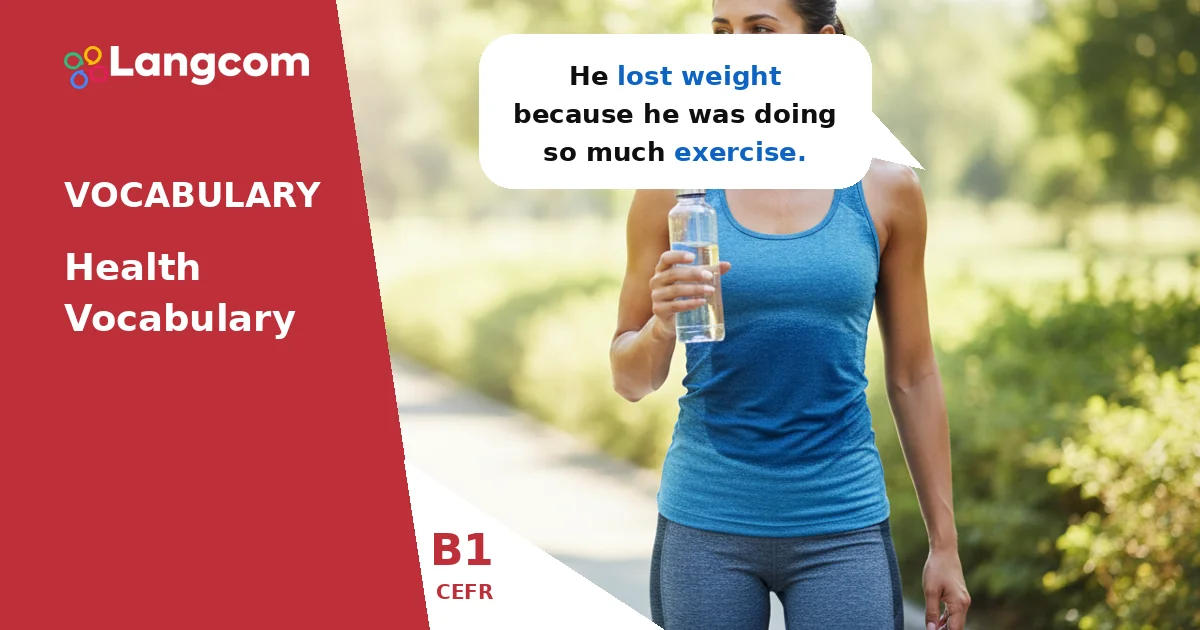
- He lost weight because he was doing so much exercise.
- He decided to give up smoking, because it was a very expensive habit.
- After my holiday, I was five kilos overweight.
- It's easy to put on weight if you work in an office and don't get any exercise.
- I'm very healthy - I keep in shape by running every day.
- I was a regular smoker for years, but then I decided to stop.
- I never do any exercise but I'm thin because I eat a healthy diet.
- She's on a diet again - this time she's only eating bread and carrots for a week.
- I have two allergies - animal hair and bee stings.
Übung
✍️ Du bist dir nicht sicher, auf welchem Niveau du bist?
Machen Sie unseren kostenlosen Einstufungstest und erhalten Sie individuelles Feedback von zertifizierten Cambridge-Prüfern.
Machen Sie unseren KOSTENLOSEN EinstufungstestHäufige Fehler bei Spanischsprechern
Spanish speakers sometimes make direct translations that don't sound natural in English. Here are some common errors:
-
Falsch: I make diet.
Richtig: I am on a diet. oder I eat a healthy diet. (depending on meaning)
-
Falsch: I have weight.
Richtig: I put on weight. oder I gained weight.
-
Falsch: I do exercise.
Richtig: I exercise. oder I get exercise. oder I work out. (to keep in shape oder get fit)
-
Falsch: I have allergy.
Richtig: I have an allergy. (singular) or I have allergies. (plural)
Häufig gestellte Fragen
Why are collocations important for B1 English learners?
Collocations help B1 learners speak and write more naturally. They show a deeper understanding of English vocabulary beyond single words, which is important for fluency and confidence.
Can I use 'do exercise' instead of 'get fit' or 'keep in shape'?
While 'do exercise' is grammatically correct, it's less common than exercise as a verb, or phrases like get fit oder keep in shape. Using the collocations makes your English sound more natural.
What is the difference between 'be on a diet' and 'eat a healthy diet'?
Be on a diet means following a specific eating plan, often to lose weight. Eat a healthy diet means generally consuming nutritious food for overall well-being, not necessarily to lose weight.
How can I remember new collocations?
Try to learn words in groups, not individually. When you learn a new noun like 'diet', also learn its common verbs like eat a healthy diet oder be on a diet. Practice using them in sentences and review them regularly.



0 Kommentare